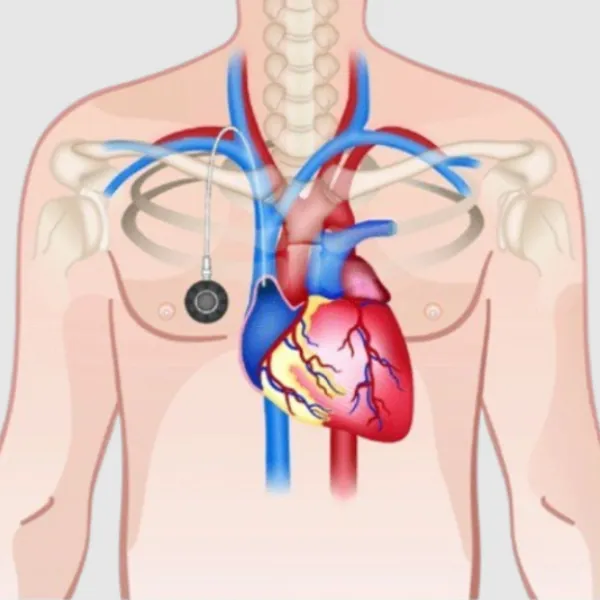
When chemotherapy or other intravenous cancer treatments are expected to continue over multiple cycles, repeated insertion of peripheral IV lines can become uncomfortable and difficult. A chemoport can provide reliable long-term access to the bloodstream for appropriately selected patients.
Understanding what chemoport insertion involves can reduce uncertainty before the procedure.
What Is a Chemoport?
A chemoport is a small implanted venous access device.
It consists of a reservoir placed beneath the skin and a catheter that connects the reservoir to a large vein.
Because the device remains completely under the skin when it is not being accessed, patients generally do not have an external tube hanging from the body.
Why Might a Chemoport Be Recommended?
A chemoport may be considered when patients need:
- Repeated chemotherapy
- Long-term intravenous treatment
- Frequent blood access in selected circumstances
- Medications that are difficult to administer through small peripheral veins
Not every patient receiving chemotherapy requires a chemoport.
The decision depends on the treatment regimen, expected duration, venous access and individual clinical circumstances.
What Happens Before Insertion?
Before the procedure, the treating team reviews medical history and current medications.
Patients should tell their doctor about:
- Blood-thinning medicines
- Bleeding disorders
- Allergies
- Previous central venous devices
- Active infections
- Significant medical conditions
Blood investigations may be requested to assess parameters such as blood counts and clotting.
Patients should follow the specific fasting and medication instructions provided by their treatment team.
How Is the Port Inserted?
Chemoport insertion is generally performed using sterile technique.
A small incision is made to create a pocket beneath the skin for the port reservoir. The catheter is then positioned within an appropriate central vein.
Imaging guidance may be used to assist safe placement.
The incision is closed after the device has been positioned.
The exact anaesthesia or sedation approach can vary according to the patient and clinical setting.
What Should Patients Expect Afterwards?
Some discomfort, bruising or tenderness around the insertion area can occur during early recovery.
Patients receive instructions about wound care and when the port can be used.
The site should gradually settle as healing progresses.
Warning Signs After Chemoport Insertion
Patients should contact their treating team if they develop concerning symptoms such as:
- Increasing redness
- Significant swelling
- Pus or discharge
- Fever
- Persistent bleeding
- Increasing pain
- Swelling of the neck or arm
- Breathing difficulty
These symptoms do not always mean there is a serious complication, but they warrant prompt medical assessment.
How Is a Chemoport Maintained?
When treatment is being administered, trained healthcare professionals access the port using an appropriate needle and sterile technique.
Ports also require appropriate flushing and maintenance according to the treatment centre's protocol.
Patients should not attempt to manipulate or access the device themselves.
Questions to Ask Before the Procedure
Before chemoport insertion, it can be useful to clarify:
- Why is a port recommended for my treatment?
- Where will it be positioned?
- What medications should I stop or continue?
- When can chemotherapy begin through it?
- How should I care for the incision?
- How is the port maintained between treatment cycles?
- When will it eventually be removed?
For patients undergoing cancer treatment in Mumbai, coordinating chemoport insertion with the oncology treatment schedule can help minimise unnecessary delays.
Dr. Sasmita Vadgaonkar provides surgical oncology care in Vile Parle and can assess patients when chemoport insertion is required as part of their treatment pathway.
A chemoport is primarily a practical tool for reliable venous access. Knowing how the procedure is performed, how the site should be cared for and which symptoms require attention can make patients better prepared for ongoing treatment.
Keywords