

When cancer spreads to the lining of the abdominal cavity, treatment decisions often become more complex. While systemic chemotherapy remains an important part of cancer care, advances in surgical oncology have introduced additional options for carefully selected patients. One such innovation is Pressurized Intraperitoneal Aerosol Chemotherapy (PIPAC), a minimally invasive procedure designed to deliver chemotherapy directly into the abdomen.
Although PIPAC is not suitable for every patient with advanced cancer, it offers a promising option in specific clinical situations. Understanding how it works, who may benefit, and what to expect from the procedure can help patients and their families have more informed discussions with their healthcare team.
What Is PIPAC?
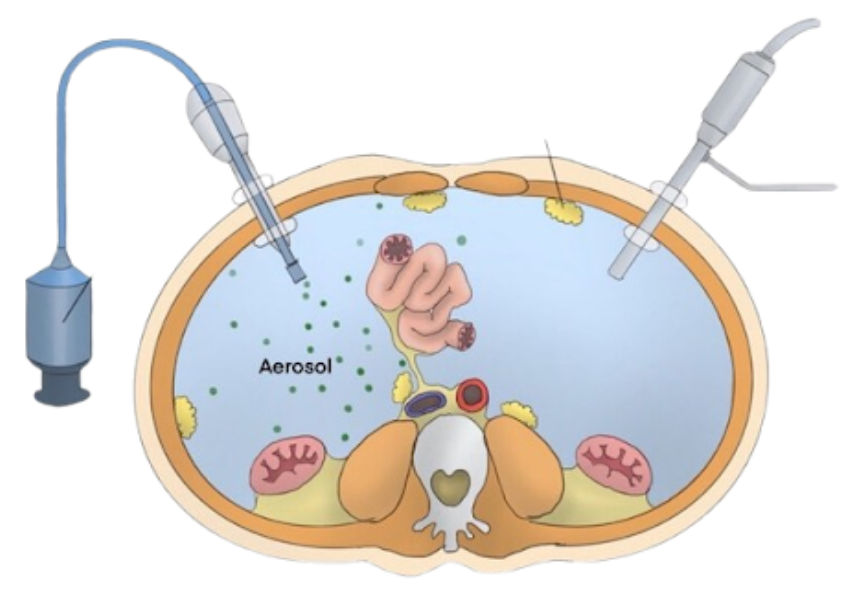
PIPAC is a specialised treatment in which chemotherapy is delivered into the abdominal cavity as a fine aerosol during a laparoscopic procedure. Unlike traditional intravenous chemotherapy, which travels throughout the body, PIPAC targets the area where cancer has spread.
The chemotherapy is administered under controlled pressure, allowing the medication to spread more evenly across the peritoneal surfaces. This method is intended to improve contact between the chemotherapy and tumour tissue while using significantly lower drug doses than conventional systemic treatment.
The procedure is generally performed under general anaesthesia using minimally invasive laparoscopic techniques.
Why Is PIPAC Different?
Traditional chemotherapy reaches abdominal tumours through the bloodstream, but some cancer deposits on the peritoneal lining receive a limited blood supply, making treatment less effective.
PIPAC addresses this challenge by delivering chemotherapy directly into the abdominal cavity.
Potential advantages include:
- Better distribution of chemotherapy within the abdomen
- Improved penetration into superficial tumour deposits
- Lower systemic exposure to chemotherapy
- Ability to repeat treatment in selected patients
- Minimally invasive approach with relatively small incisions
Researchers continue to study PIPAC to better understand its long-term benefits across different cancer types.
Which Patients May Be Considered for PIPAC?
PIPAC is not a replacement for surgery or standard chemotherapy. Instead, it may be considered for selected patients after careful multidisciplinary evaluation.
It may be recommended in certain cases involving:
- Gastric cancer with peritoneal spread
- Colorectal cancer involving the peritoneum
- Ovarian cancer recurrence
- Appendix cancers
- Peritoneal mesothelioma
- Other cancers with carefully selected abdominal involvement
Eligibility depends on several factors, including previous treatments, overall health, disease extent, and treatment objectives.
Every recommendation is individualised.
How Is the Procedure Performed?
PIPAC is carried out in an operating theatre under general anaesthesia.
The procedure typically involves:
- Making two small laparoscopic incisions.
- Inserting a camera to examine the abdominal cavity.
- Assessing the extent of disease.
- Collecting tissue samples if required.
- Delivering chemotherapy as a pressurised aerosol.
- Allowing the medication to remain in contact with the affected tissues for a predetermined time before safely completing the procedure.
Because the operation is minimally invasive, recovery is often quicker than with major abdominal surgery.
Recovery After PIPAC
Most patients recover faster compared with extensive open surgical procedures.
Following treatment, patients are monitored for:
- Pain control
- Nausea management
- Return of normal bowel activity
- Wound healing
- General recovery
Many individuals are able to return home within a short period, depending on their overall condition and the treatment plan.
The healthcare team provides detailed guidance regarding activity levels, medications, nutrition, and follow-up appointments.
Can PIPAC Be Repeated?
One of the unique characteristics of PIPAC is that it can be performed more than once in selected patients.
Repeat procedures allow specialists to:
- Evaluate how the tumour is responding
- Monitor disease progression
- Obtain additional biopsy samples when necessary
- Adjust future treatment strategies
The timing and number of treatments vary according to each patient's clinical response and overall treatment goals.
Important Questions to Discuss with Your Specialist
If PIPAC is being considered, patients may wish to ask:
- Am I a suitable candidate for this procedure?
- What are the expected benefits in my situation?
- What alternatives should I consider?
- Will I also require systemic chemotherapy?
- How many PIPAC sessions may be recommended?
- What are the possible risks and side effects?
Having clear discussions with the treating team helps patients understand both the potential benefits and limitations of the procedure.
The Value of Expert Evaluation
Advanced cancer treatment often requires highly personalised decision-making rather than a standard treatment pathway. Procedures such as PIPAC should be offered only after comprehensive assessment by specialists experienced in managing complex abdominal cancers.
Patients in Vile Parle, Mumbai, and across Maharashtra increasingly seek expert second opinions when exploring advanced treatment options for peritoneal cancers. Dr. Sasmita Vadgaonkar evaluates patients using a multidisciplinary approach to determine whether procedures such as PIPAC, cytoreductive surgery, or other evidence-based surgical treatments are appropriate based on the type of cancer, disease extent, and overall health.
As cancer care continues to evolve, minimally invasive innovations like PIPAC are expanding treatment possibilities for selected patients. While it is not suitable for everyone, timely specialist evaluation can help identify whether this approach fits into an individual's comprehensive cancer treatment plan, allowing decisions to be guided by clinical evidence and patient-centred care.